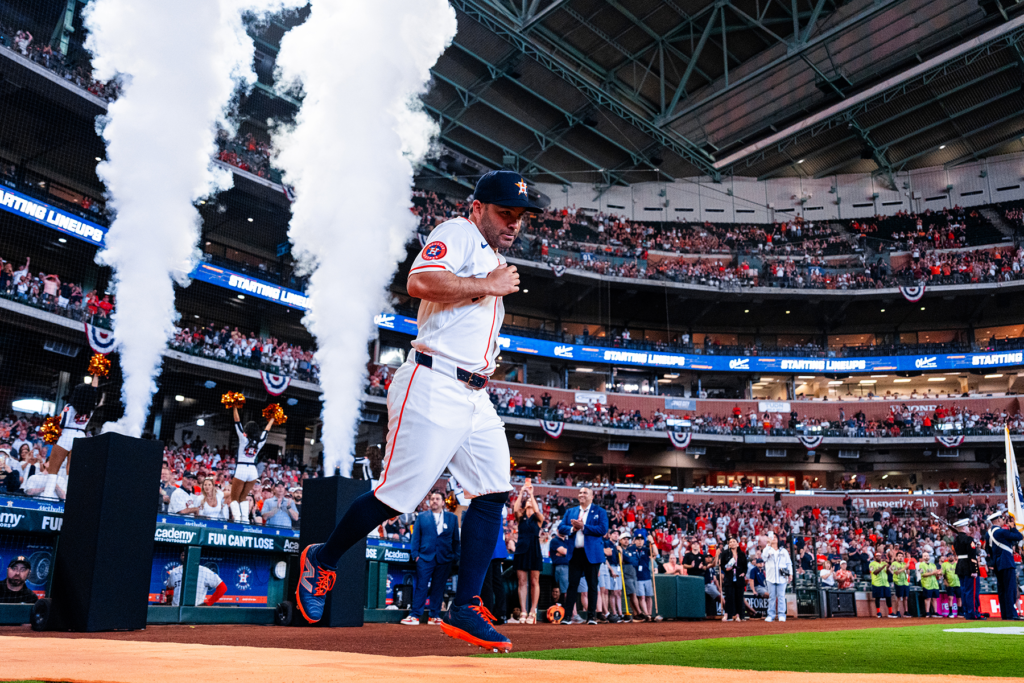
Photo Credit: Houston Astros
Baseball, history and a distinctly Houston experience at Daikin Park
There is something about a day baseball game that still feels wonderfully old-fashioned.
Maybe it is the sunlight outside, the idea of leaving the ordinary responsibilities of a Wednesday afternoon behind for a few hours, or simply baseball itself, one of the few major sports perfectly content to let the afternoon unfold at its own pace.
Whatever the reason, walking into Daikin Park on a summer afternoon in Houston reminded us that going to a baseball game is about considerably more than nine innings.
We had been here before
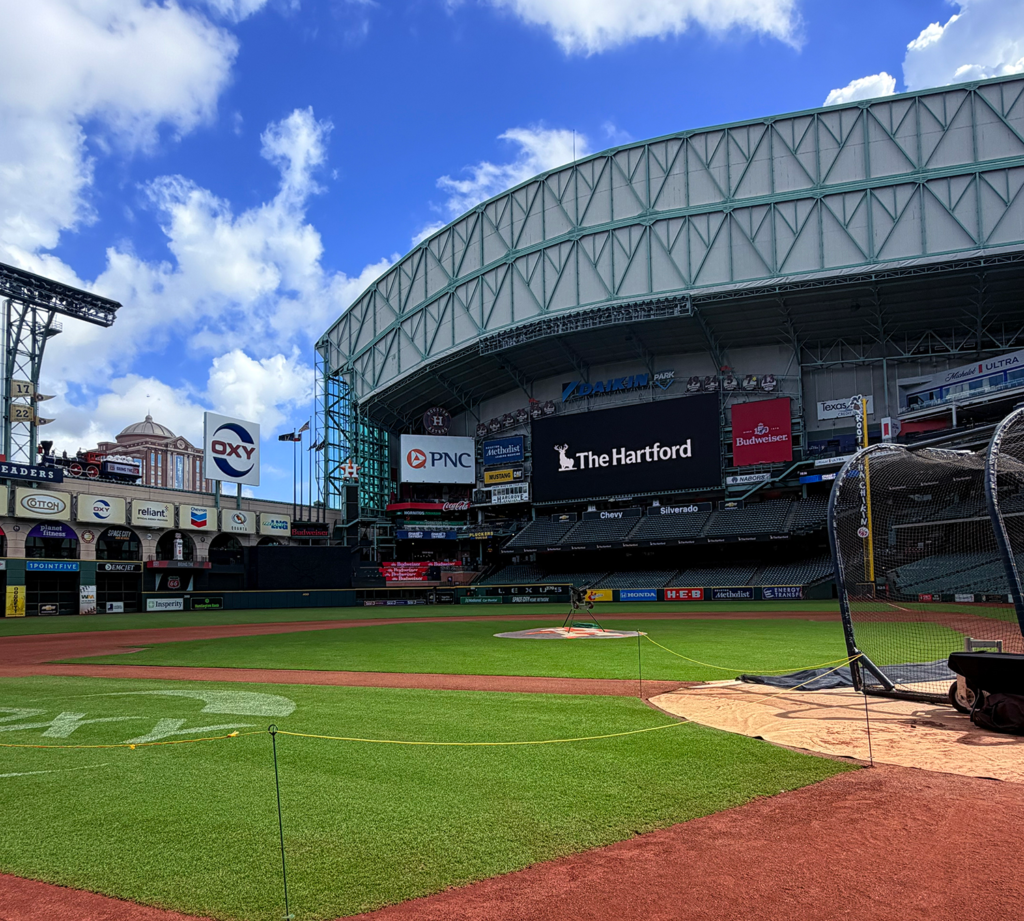
About a month earlier, we visited the ballpark for a tour, walking through its corridors and premium spaces and seeing the building without the energy of a game surrounding it. Even empty, the place had presence. The scale of the field, meticulously maintained grass, enormous retractable roof, train perched above left field and history embedded throughout the building made an impression.
We left that tour thinking the obvious thing: We need to come back when they’re playing baseball.
We returned on August 5 as the Astros welcomed the Toronto Blue Jays to Houston for a 1:10 afternoon start. Toronto arrived as the reigning American League champion, having reached Game 7 of the World Series the previous fall.
It was August in Houston, bright, hot and unmistakably Texas outside. Inside Daikin Park, the environment changed almost immediately. Houston solved the problem of summer baseball a long time ago, and the current ballpark’s retractable roof and climate-controlled environment are descendants of an idea the city helped pioneer more than six decades ago.
More Than Nine Innings
Major sporting events can sometimes become exhausting productions. The noise is relentless, crowds can be aggressive, alcohol can become too prominent, and everyone seems to be standing, yelling, moving or trying to get somewhere. Baseball is different. At least it was on this afternoon.
There were children in jerseys and grandparents in caps, fathers and daughters, mothers and sons, couples, groups of friends and business associates. Serious baseball fans tracked every pitch alongside people perfectly happy to spend half an inning talking over lunch.
Visiting Blue Jays fans were there, too, and somehow everyone seemed to coexist exactly the way sports are supposed to work.
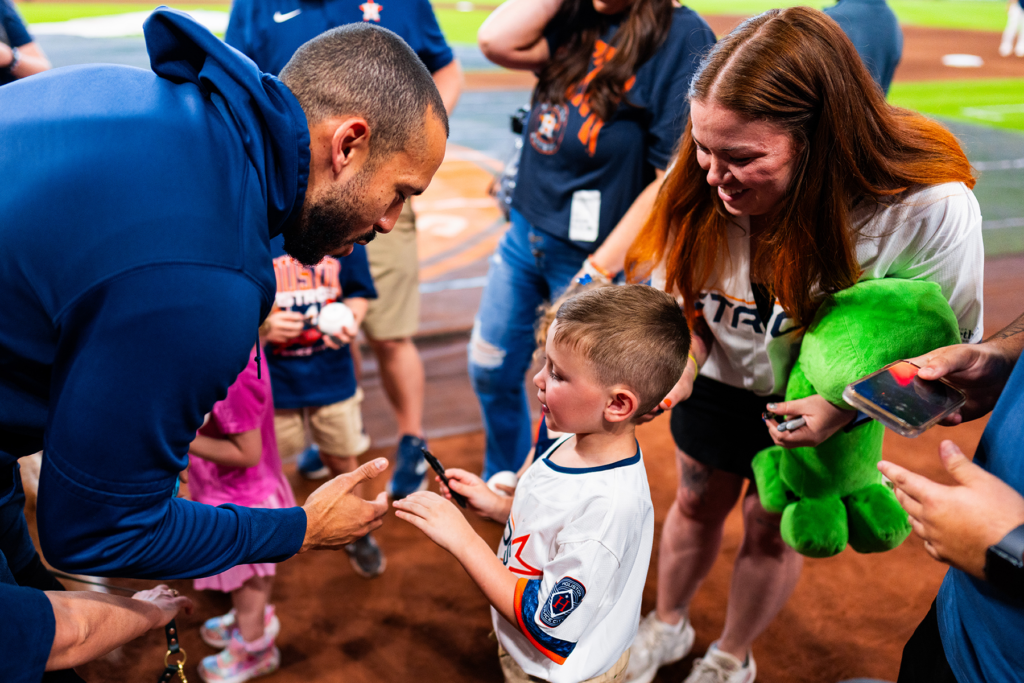
There was an unmistakable sense of community throughout the building. Families stopped for photographs, children explored the interactive areas, and fans posed beneath Astros signage and alongside pieces of team history. The Shooting Stars moved throughout the stadium, Orbit supplied the expected mischief, and music, video boards and between-inning entertainment kept things moving without overwhelming the reason everyone had come.
Baseball remained at the center of everything. And this happened to be a good baseball game.
One of the afternoon’s signature moments came when José Altuve went deep. His solo home run was his 13th of the season, and when the baseball left the yard, the entire place changed in an instant. The roar came first, then the train.
High above left field, the replica locomotive began its familiar journey, one of the most recognizable celebrations in Major League Baseball.
It isn’t merely decoration. The ballpark incorporates Houston’s historic Union Station, which opened in 1911, and the train provides a deliberate link between the modern stadium and the railroad history of the site. The replica 19th-century locomotive travels along a track high above the field to mark Astros home runs and victories.
Altuve himself has become part of the visual language of Astros baseball. Generations of Houston stars have come through this franchise, from Jimmy Wynn and Joe Morgan to Nolan Ryan, Craig Biggio and Jeff Bagwell. Altuve belongs comfortably in that lineage. Seeing one of his home runs in person felt like receiving one of the essential ingredients of the Astros experience.
Our afternoon also included access to the Gallagher Club, offering another perspective on what the contemporary ballpark has become.
Located on the Bank of America Suite Level, the Gallagher Club combines baseball with something approaching private-club hospitality, including lounge and dining seating, televisions throughout the space, gourmet food and snacks, nonalcoholic beverages, a private bar and in-club service.
What we liked most, however, wasn’t simply that it was premium. It was that it fit baseball.
You could sit and eat, walk back toward the game, have a conversation, watch an inning, take photographs and return to your seat without feeling as though you were missing the experience.
That may be baseball’s secret advantage over almost every other major sport. Football demands attention, basketball can turn completely in 40 seconds and hockey seems to happen at twice the speed human eyes were designed to process.
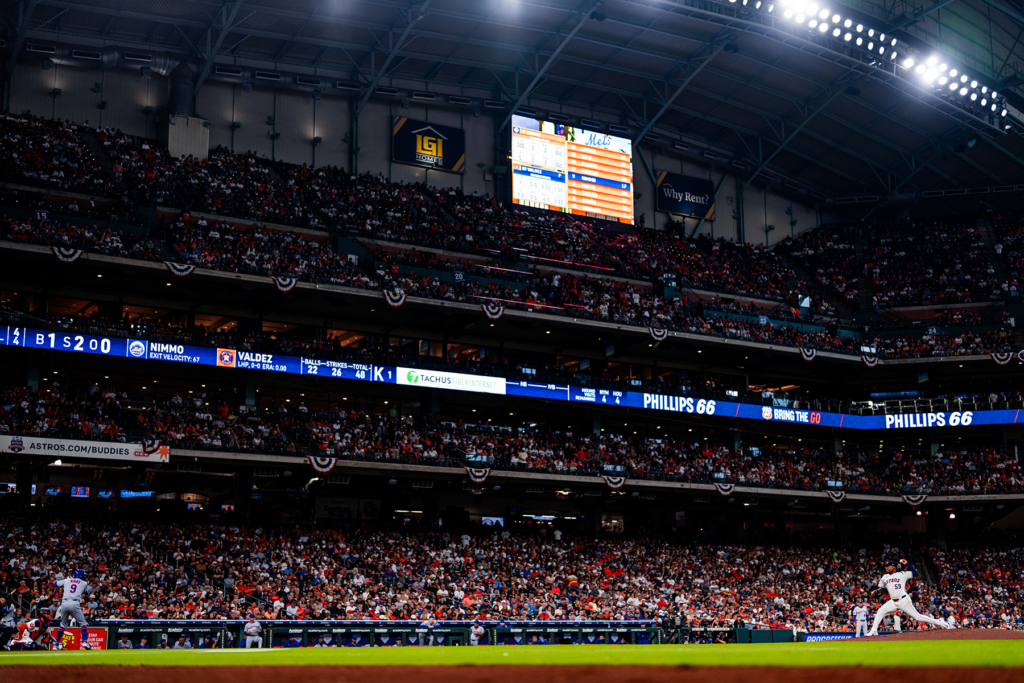
Photo Credit: Houston Astros
Baseball breathes, and Daikin Park understands
The Gallagher Club is one example, but the ballpark offers many ways to experience a game. The Honda Club Level provides elevated food and beverage choices while maintaining field views from various points along the concourse. Honda owners can even show a Honda key during regular-season home games for access to the club-level concourse for themselves and up to three guests, subject to capacity.
There are suites and gathering spaces, the Crawford Boxes, Budweiser Brew House, center-field hospitality areas and group offerings designed for everyone from families to companies entertaining clients. The Astros also market group experiences to companies, schools, nonprofits, families, churches and sports organizations.
The result is a ballpark that works equally well as a sporting venue and a meeting place. You can bring your daughter, entertain an important client, meet friends or arrive with 20 employees, and none of those experiences feels out of place.
That versatility is not an accident. In Houston, it is practically a baseball tradition.
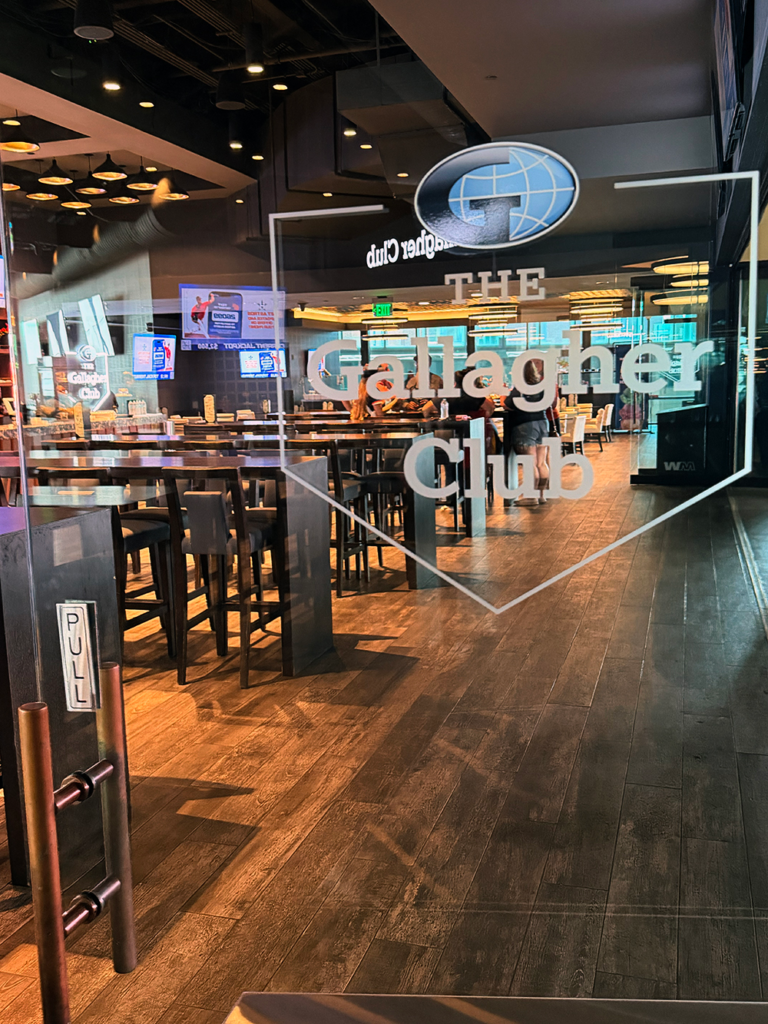
Photo Credit: Kayla Elliott
Before Daikin Park, there was the Astrodome
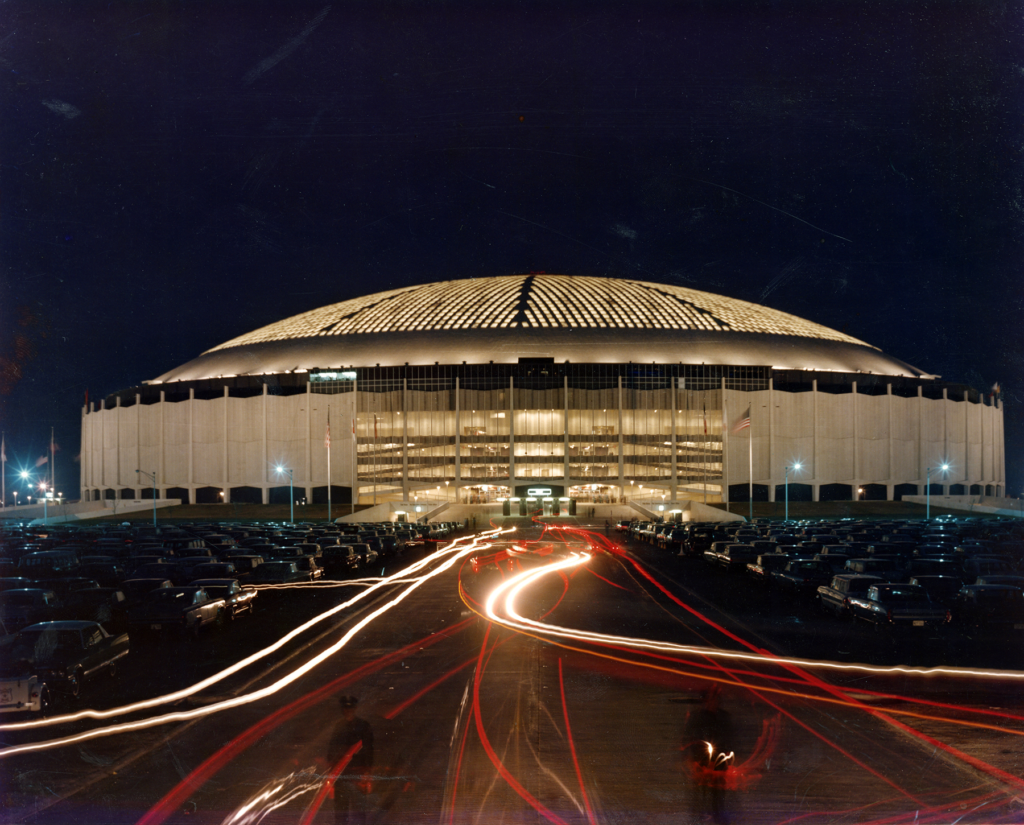
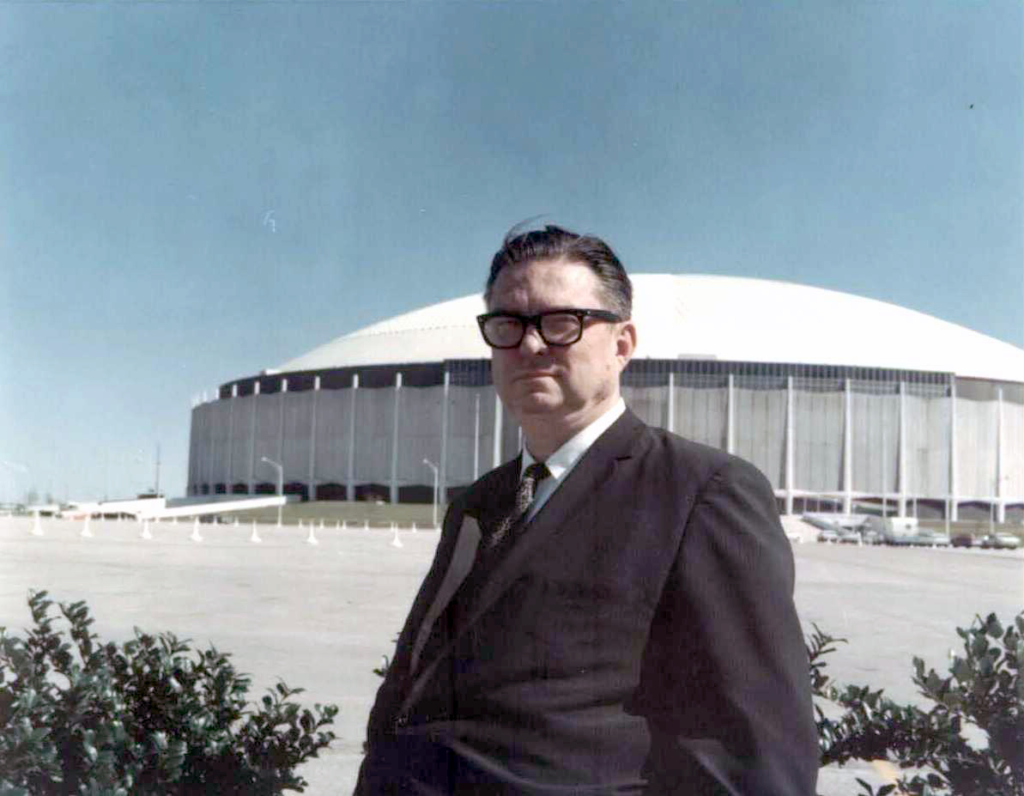
Houston’s expansion franchise began play in 1962 as the Colt .45s. Three years later, with the team preparing to move into its futuristic new indoor stadium, Judge Roy Hofheinz announced a name intended to better represent the city: the Astros.
The name connected Houston’s baseball team to the space program and the astronauts working in the city. The Astrodome and Astros were meant to project the same message: Houston was looking forward. Then the building opened.
The Astrodome was unlike anything American sports had seen. The world’s first domed stadium stood 18 stories high beneath a 642-foot span and maintained a climate-controlled interior around 72 degrees. It contained theater-style seating, restaurants, luxury boxes and a massive scoreboard. When natural grass proved impossible to maintain beneath the roof, another innovation followed: artificial turf.
Everything became Astro: the Astros, the Astrodome, nearby Astroworld and, of course, AstroTurf. It became part of Houston’s vocabulary.
The building was quickly christened the Eighth Wonder of the World, and for generations of Texans, seeing that enormous dome rise into view meant something.
For those of us who visited as children, the memory remains unusually vivid.
Seeing the Astrodome was almost like seeing a monument. Long before stadium architecture became its own industry and retractable roofs became commonplace, this enormous structure appeared on the Houston landscape as though somebody had dropped part of the future into Texas.
Like the pyramids of Egypt, the Eiffel Tower in Paris or Christ the Redeemer overlooking Rio de Janeiro, the Astrodome became instantly identifiable with its city. You didn’t need anyone to tell you where you were. You were in Houston.
And if something important was happening, there was a decent chance the Astrodome was involved.
Certainly baseball, and what baseball it witnessed: César Cedeño patrolling center field, José Cruz becoming one of the most beloved Astros of his generation and the towering J.R. Richard standing on the mound, one of the most intimidating pitchers in baseball, firing fastballs beneath that enormous roof.
But the Dome was never only about baseball. It hosted Houston Oilers and University of Houston football, boxing, concerts and countless special events, some of which became the stuff of legend.
In 1971, daredevil Evel Knievel brought his motorcycle into the Astrodome and jumped 13 cars on consecutive nights, drawing enormous crowds to watch a man make a living doing things most reasonable people would never attempt.
More than two decades later, another Texas icon made the Dome her own. The Tejano superstar performed at the Houston Livestock Show and Rodeo inside the Astrodome in 1993, 1994 and 1995. Her final appearance there, wearing the now-iconic purple jumpsuit before a packed house, became her final televised concert and one of the enduring images of her extraordinary career.
For decades, the Houston Livestock Show and Rodeo itself remained one of the city’s defining institutions. The Astrodome, after all, had been designed from the beginning as far more than a baseball stadium.
Hollywood came, too.
In 1977, “The Bad News Bears in Breaking Training” turned the Astrodome into part of its story, with the young Bears fighting for the chance to finish a game on the field. Astros players even appeared in the film. For a generation of children watching that movie, the Dome seemed almost mythical.
That is what great buildings sometimes do. They become larger than their original purpose.
The Astros played their final Astrodome game in 1999. A year later, baseball returned to grass and moved downtown.
The new stadium opened in 2000 as Enron Field, incorporating the restored 1911 Union Station and introducing another distinctly Houston architectural statement: a retractable roof stretching over natural grass. After the Enron collapse, the stadium briefly became Astros Field before a new naming agreement made it Minute Maid Park in 2002.
For more than two decades, most people simply called it Minute Maid
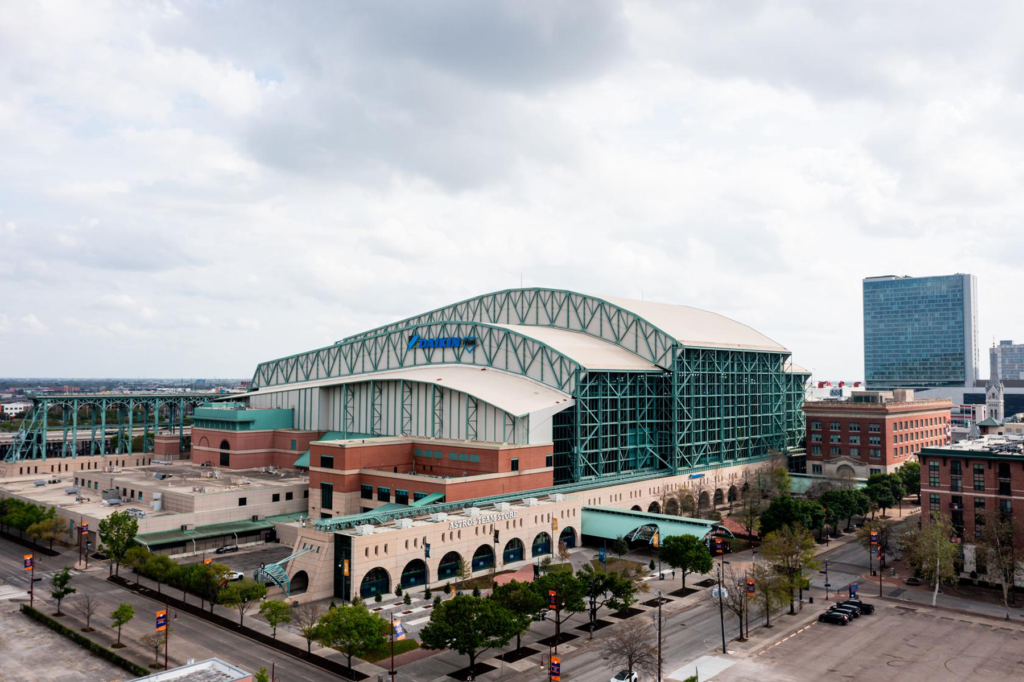
Photo Credit: Houston Astros
Beginning January 1, 2025, the name changed again when the Astros entered a 15-year naming-rights partnership with Daikin Comfort Technologies, making the stadium Daikin Park through the 2039 season.
The new name may still require a moment of translation for longtime visitors. Daikin Park? Yes, Minute Maid—the same ballpark, the same train and the same downtown Houston landmark. Now more than a quarter century old, it has aged remarkably well.
Part of that comes from the architecture. Union Station gives the building an authenticity that cannot be manufactured. The giant glass wall provides views toward downtown even when the roof is closed. Deep green seats and natural grass create the visual language of traditional baseball, while the retractable roof solves the decidedly modern problem of playing through a Houston summer. The result is a stadium that manages to feel contemporary without feeling disposable.
The Astros Beyond Baseball
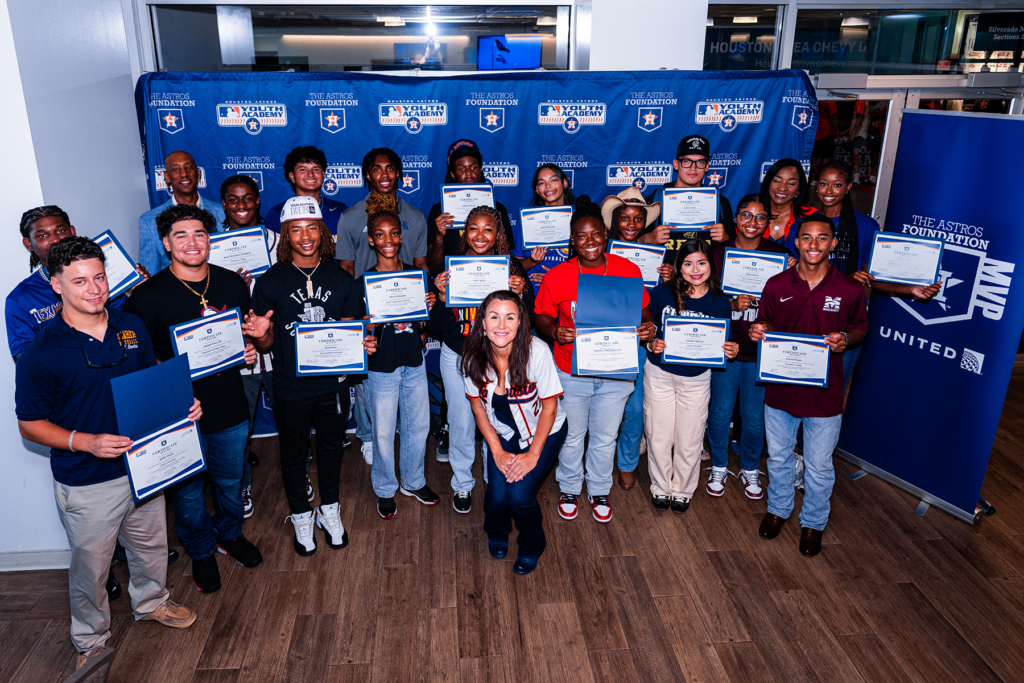
Photo Credit: Houston Astros
The organization extends its connection to Houston beyond the gates as well. The Astros Foundation, the club’s official nonprofit organization, supports youth baseball and softball, educational programs, military members and first responders, childhood cancer initiatives, domestic violence awareness and efforts addressing homelessness. Programs include the Astros Youth Academy, Nike RBI and the Community Leaders initiative, which has invested millions of dollars into renovating baseball and softball fields in Houston-area public parks.
There is considerably more to that story, and it deserves more space than we can give it here. We intend to return to it.
Because the more time you spend around this organization, the more apparent it becomes that the Astros occupy an unusual place in Houston. They are certainly a baseball franchise, but they are also a civic institution.
Perhaps that explains the feeling we kept noticing throughout the afternoon: community.
Take Me Out to the Ballgame
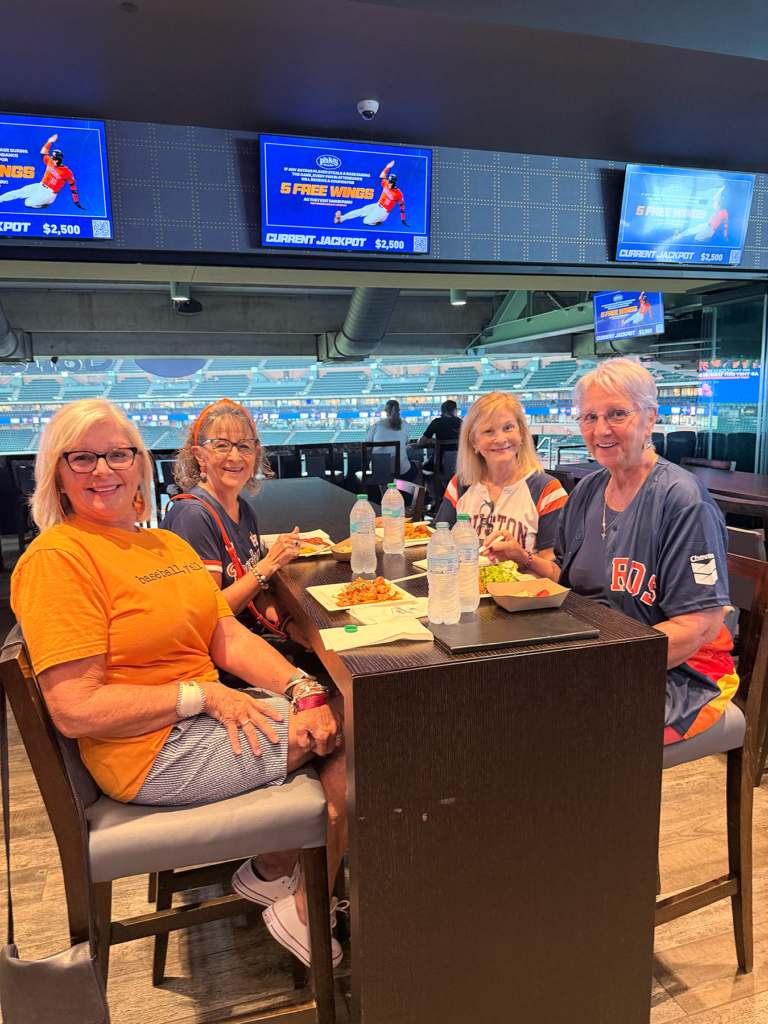
Photo Credit: Kayla Elliott
We will remember the immaculate field, families stopping for photographs, conversations over food in the Gallagher Club and the people working throughout the stadium. We remembered how easily thousands of people, including plenty wearing the other team’s colors, seemed to enjoy an afternoon together. Mostly, we remembered how good it felt to be at a baseball game.
Professional sports spend enormous amounts of money creating entertainment, but sometimes the most successful experience is the one that doesn’t feel manufactured.
Somewhere beneath all the changes is the same idea Judge Roy Hofheinz understood more than 60 years ago: a ballpark can be bigger than baseball. It can be a place where a city gathers. And on a sunny Wednesday afternoon in August, sitting among families, longtime fans, children seeing things for the first time and people simply enjoying one another’s company, that was the unmistakable feeling at Daikin Park.
We had come to see the Astros play baseball. We left having experienced Houston.
By Tony Dean